
Large Format Tile Floor Installation — Ottawa
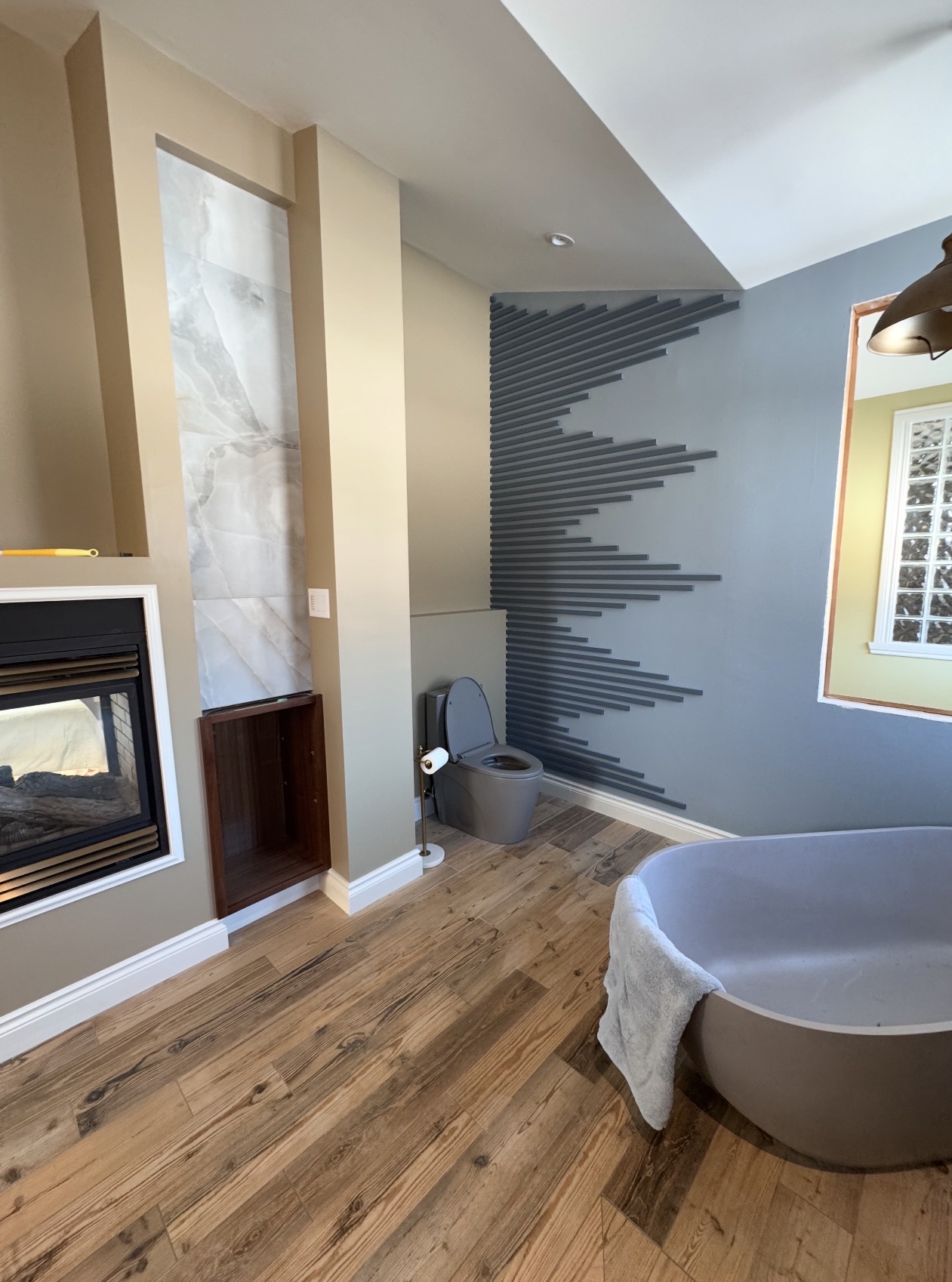
24×24 and larger porcelain tile installed in an Ottawa home — flat substrate, medium-bed mortar, full back-buttering, and lippage clips throughout for a lippage-free result.
Project Overview
Large format tile installations are fundamentally different from standard tile work — not in the sense that the basic process changes, but in the sense that the tolerance for error at every stage is much tighter. A 4×4 tile can accommodate a slightly uneven substrate and will still look acceptable. A 24×24 tile cannot. Its size means it spans across substrate variations that smaller tiles would follow, producing lippage — the visible step between adjacent tile edges — that is both aesthetically unacceptable and a trip hazard.
This Ottawa project used 24×24 and 24×48 porcelain tile in a large open floor area. The size of the tile, combined with the homeowner's expectation of a perfectly flat, lippage-free result, meant that every step of the process — substrate prep, mortar selection, back-buttering technique, and lippage clip use — had to be executed correctly.
The Technical Challenge: Flatness and Lippage
ANSI A108.02 specifies that tile installations shall have a flat substrate with no more than 1/8" variation in 10 feet, and no more than 1/16" variation in 24 inches. For large format tile specifically — any tile with at least one edge over 15 inches — these requirements are critical because the tile is rigid and will not conform to substrate variations the way smaller, thinner tile does.
Lippage is what happens when tile installation standards aren't met. It's the visible height difference between two adjacent tiles — one edge is higher than the other. Lippage below 1/32" is generally imperceptible. Above 1/16", it catches the eye. Above 1/8", it's a trip hazard. The TCNA (Tile Council of North America) specifies a maximum of 1/32" lippage when grout joints are 1/16" or less — a very tight standard that demands both substrate flatness and careful setting technique.
The substrate in this Ottawa home, prior to any prep work, had several areas that did not meet the 1/8" in 10 feet standard required for large format tile. These areas were identified during the assessment walkthrough, documented, and addressed before installation began. There was no negotiating around this step — setting large format tile on an out-of-flat substrate produces lippage regardless of how carefully the tile is placed.
Substrate Preparation
High spots were ground with a diamond-cup angle grinder. Because large format tile requires tighter flatness tolerances than standard tile, each area was ground and rechecked more carefully than would be required for a smaller format installation. Low spots were filled with a Portland cement-based floor-leveling compound feathered out to blend smoothly with the surrounding surface.
After the leveling compound cured, the entire floor was checked again with a long straightedge — 10 feet minimum. Any areas still outside the 1/8" in 10-foot standard were addressed again. This iterative process takes more time than a single-pass approach, but it's the only way to produce the substrate quality that large format tile actually requires.
Setting Technique: Medium-Bed Mortar, Back-Buttering, and Lippage Clips
Medium-Bed Mortar
Standard thinset mortar is not appropriate for large format tile. Its application thickness is limited — typically 3/16" to 1/4" — and a large tile set on standard thinset with a standard trowel notch will not achieve the full mortar coverage required across its entire back surface. Medium-bed mortar is a thicker-bodied product designed specifically for large format tile; it can be applied at up to 3/4" thickness without slumping, and it compresses under the tile to achieve true full coverage without void spots.
The industry standard for mortar coverage under floor tile is 95% of the tile's back surface in wet areas, and 80% minimum in dry areas. Void spots in the mortar bed create hollow areas where the tile can flex slightly under foot traffic, cracking both the tile and the grout over time. With large format tile, achieving full coverage requires both the right mortar and the right technique.
Back-Buttering
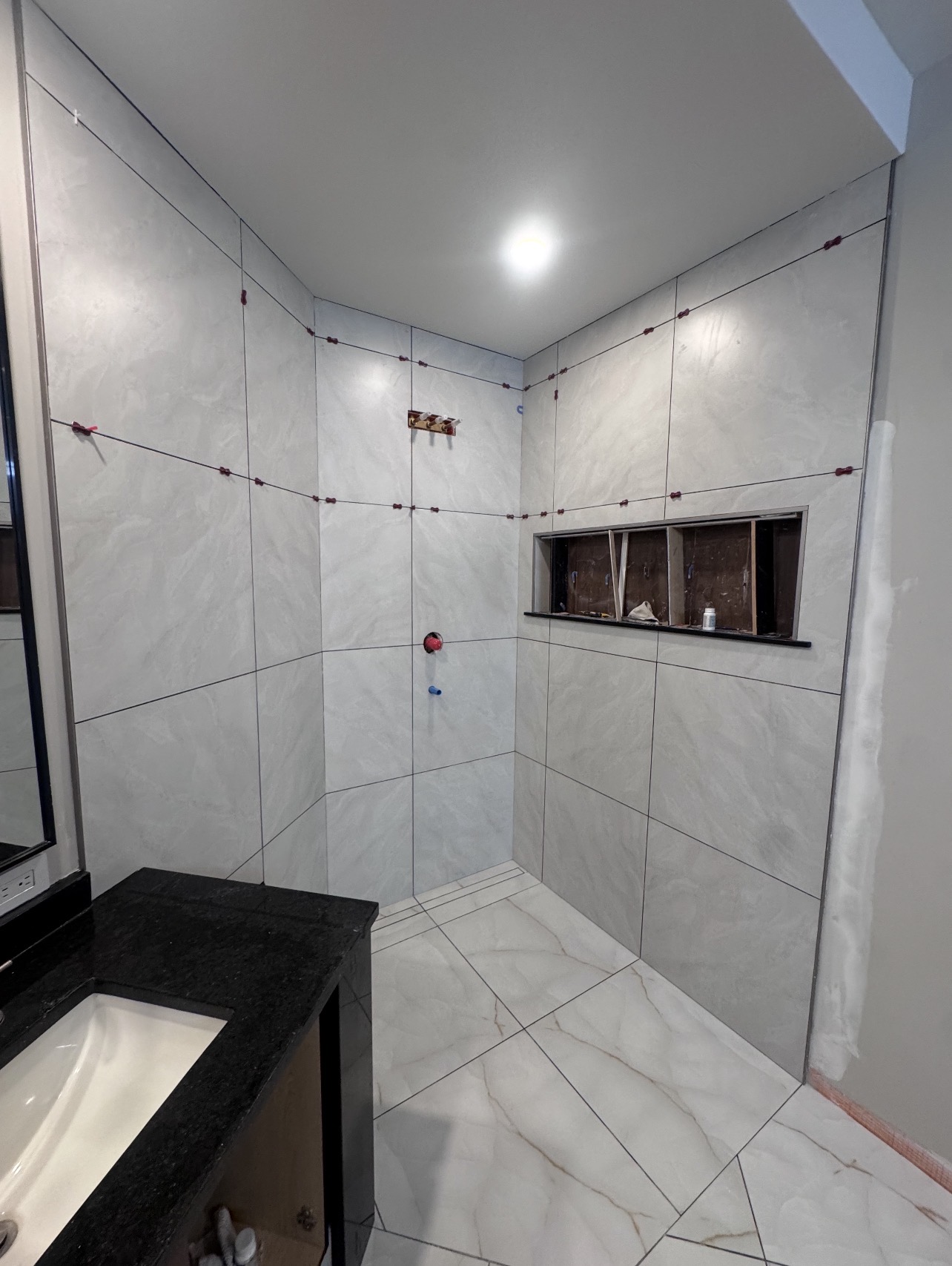
Each tile in this project was back-buttered — meaning a thin coat of mortar was applied to the back of the tile before it was set into the mortar bed on the substrate. Back-buttering ensures that the ridges left by the trowel notching on the substrate are fully collapsed and filled when the tile is pressed down, eliminating any possibility of void spots from the trowel pattern. For large format tile, back-buttering is standard practice, not an upgrade.
The tile was set by pressing firmly and sliding slightly to collapse any residual trowel ridges, then checked with a straightedge across adjacent tiles to verify there was no lippage before the mortar began to set.
Lippage Clips (Tile Leveling System)
A tile leveling system — specifically lippage clips and wedges — was used throughout this installation to maintain consistent lippage between adjacent tiles while the mortar was setting. The clips are inserted into the grout joint at the tile edges before the mortar sets, and wedges are driven into the clips to apply upward pressure to the tile edges, ensuring adjacent tiles are at the same height. The clips snap off at the tile surface level once the mortar has cured, leaving only the grout joint behind.
Lippage clips do not replace substrate preparation — a tile leveling system cannot correct for an out-of-flat substrate. They are a tool for controlling the height relationship between adjacent tiles during the setting process, and they work correctly only when the substrate is already flat enough that the tiles are reasonably close to the same plane to begin with.
Finished Result
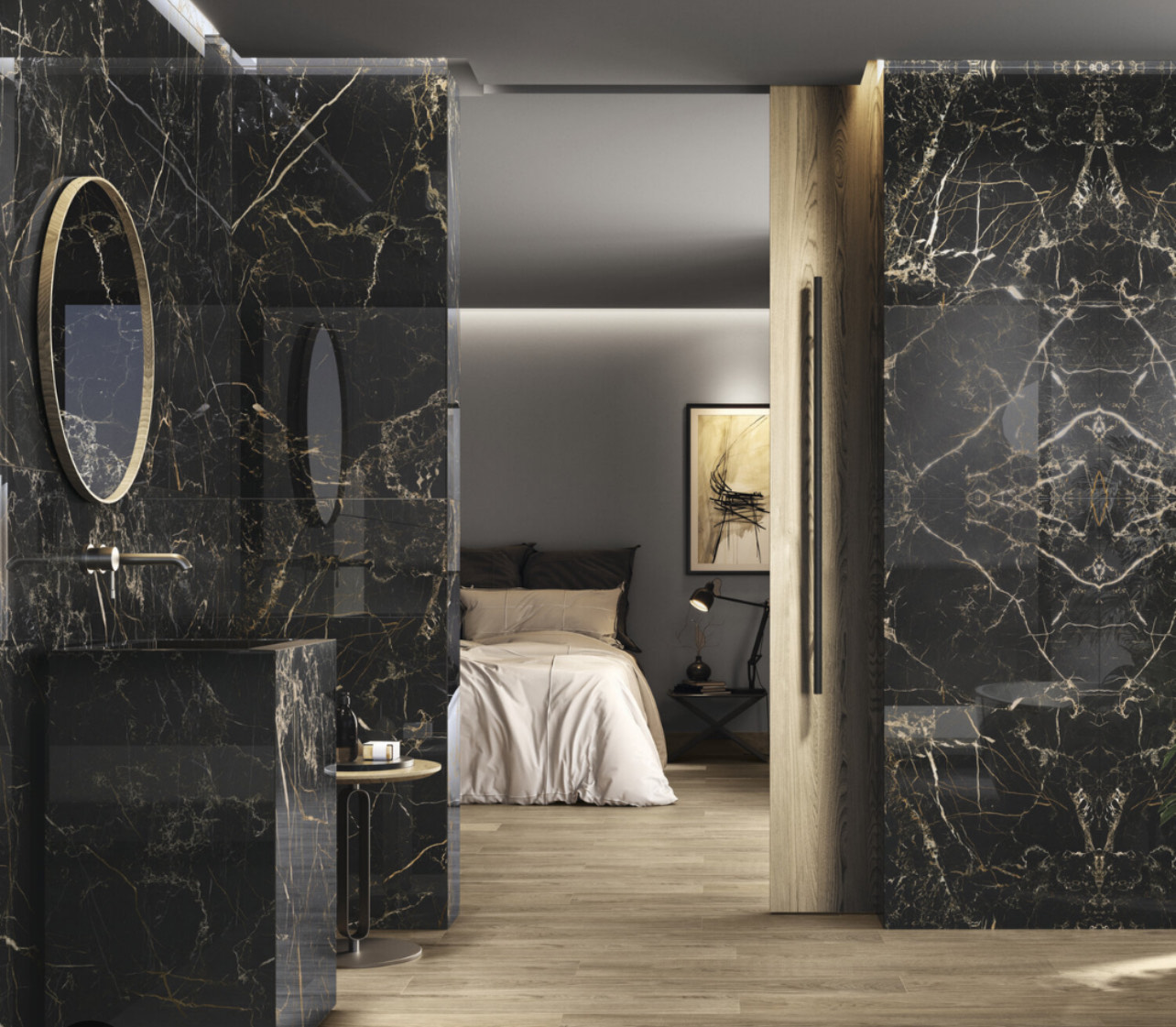
The completed floor has no visible lippage. Running a hand across the tile joints — a practical test that identifies even small height differences — produces no perceptible step at any joint. The grout joints are consistent in width throughout. The layout is balanced, with equal-width cut pieces on opposite walls.
Large format tile installations that are done correctly look clean and simple — which is exactly the effect the homeowner wanted. The visual impact comes from the tile itself, not from the installation technique. The installation's job is to disappear.
If you're considering large format tile for a floor in Ottawa, call Joseph at 613-981-8903 to discuss the project and what substrate preparation will be required.
Planning a Large Format Tile Floor in Ottawa?
Large format tile requires proper substrate prep, the right mortar, and the right technique. Get a quote from someone who does this correctly.